Oral Administration by Parents and Caregivers
HEMANGEOL (propranolol hydrochloride) oral solution 4.28 mg/mL should be initiated in infants 5 weeks to 5 months with proliferating infantile hemangioma.
Do not administer in infants weighing less than 2 kg, known hypersensitivity to propranolol or excipients, asthma or history of bronchospasm, bradycardia (<80 beats per minute), greater than first degree heartblock, decompensated heart failure, blood pressure <50/30 mmHg, or pheochromocytoma.
Recommended Dosing
- Readjust dose for changes in the child’s weight
- Administer twice daily doses at least 9 hours apart during or after feeding
- To reduce the risk of hypoglycemia, administer during or right after a feeding. Skip the dose if the child is not eating or is vomiting
- Monitor heart rate and blood pressure for 2 hours after the first dose or increasing dose
- Duration of treatment: 6 months
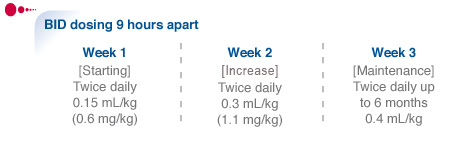
- Week 1 – starting dose is 0.15 mL/kg (0.6 mg/kg) twice daily
- Week 2 – increase dose to 0.3 mL/kg (1.1 mg/kg) twice daily
- Week 3 – increase to a maintenance dose of 0.4 mL/kg (1.7 mg/kg) twice daily
HEMANGEOL is supplied with a unique graduated oral dosing syringe and syringe adapter as a convenience to parents and caregivers.
If necessary, HEMANGEOL may be diluted in a small amount of milk or fruit juice, given in a baby’s bottle.
HEMANGEOL is a pediatric oral solution:
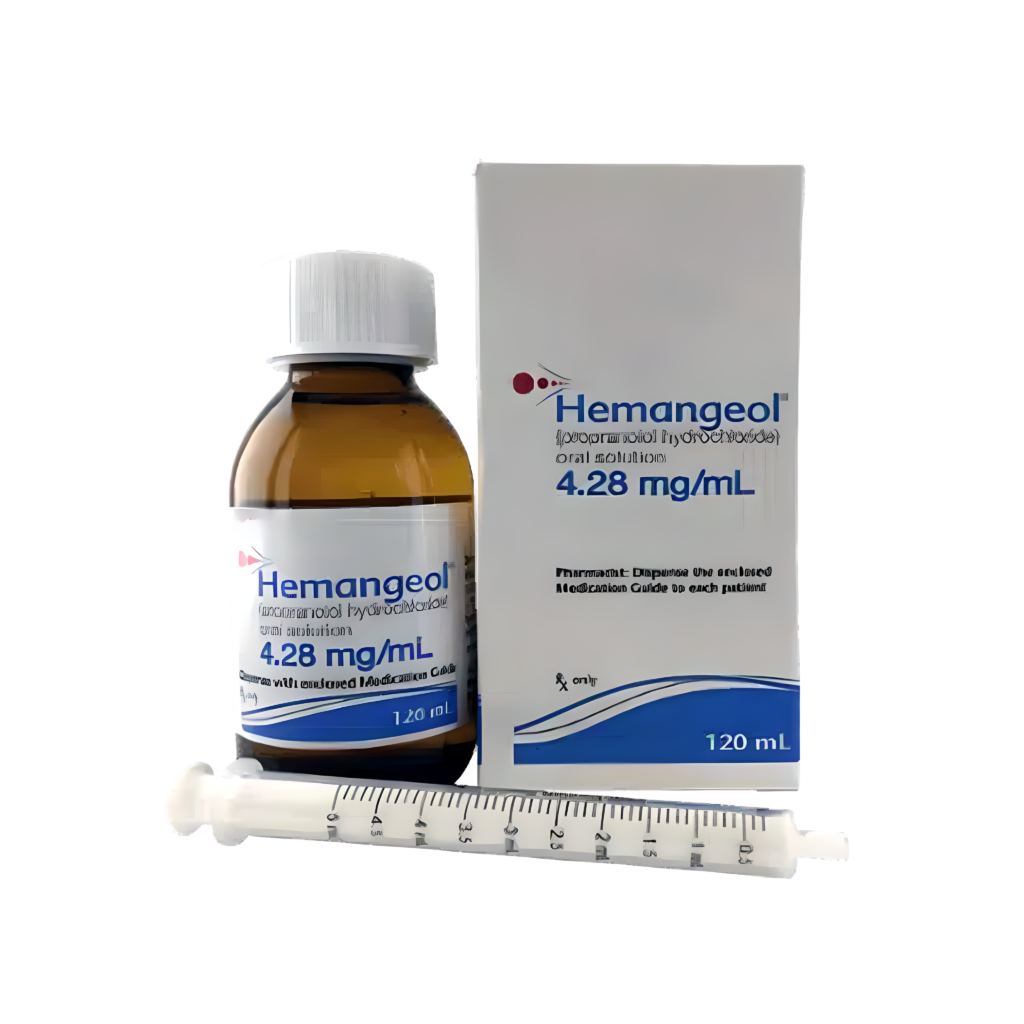
- Alcohol free, sugar free, and paraben free
- Strawberry and vanilla flavor
Hemangeol® Dosing Calculator
The Convenience of BID Dosing
HEMANGEOL (propranolol hydrochloride) 4.28 mg/mL Pediatric Oral Solution Dosing
Monitoring Your Patients
HEMANGEOL may cause or worsen bradycardia or hypotension. In the studies of HEMANGEOL for infantile hemangioma the mean decrease in heart rate was about 7 bpm with little effect on blood pressure. Monitor heart rate and blood pressure after treatment initiation or increase in dose. Discontinue treatment if severe (<80 beats per minute) or symptomatic bradycardia or hypotension (systolic blood pressure <50 mmHg) occurs.
Dosing
HEMANGEOL dose is initiated during Week 1, increased at Week 2, and reaches maintenance at Week 3.
It is administered twice daily for 6 months. Dosing should be readjusted periodically as the child’s weight increases.
Please see “Dose According to Weight” below.

Reducing the Risk of Hypoglycemia
HEMANGEOL prevents the response of endogenous catecholamines to correct hypoglycemia and masks the adrenergic warning signs of hypoglycemia, particularly tachycardia, palpitations and sweating. HEMANGEOL can cause hypoglycemia, at any time during treatment. Hypoglycemia may present in the form of seizures, lethargy, or coma.
- To reduce the risk of hypoglycemia, administer HEMANGEOL orally during or right after a feeding
- Skip the dose during a fasting period (e.g., poor oral food intake, vomiting)
- Skip the dose when glucose demands are increased (e.g., cold, stress, infections).
- Concomitant treatment with corticosteroids may increase the risk of hypoglycemia.
- HEMANGEOL is supplied with an oral dosing syringe and syringe adapter for convenience
- If necessary, HEMANGEOL can be diluted in a small quantity of milk or fruit juice and given in a baby’s bottle
Discontinuing Treatment
Hypoglycemia: Instruct parents or caregivers how to recognize the signs of hypoglycemia. Tell them to discontinue HEMANGEOL if hypoglycemia develops and call their healthcare provider immediately or take the child to the emergency room.
Bradycardia and Hypotension: Instruct parents or caregivers to contact their healthcare provider in case of fatigue, pallor, slow or uneven heart beats, peripheral coldness or fainting in infant. Discontinue treatment if severe (<80 beats per minute) or symptomatic bradycardia or hypotension (systolic blood pressure <50 mmHg) occurs.
Bronchospasm: Instruct parents or caregivers to contact their healthcare provider or go to the nearest hospital emergency room if their child has breathing problems or wheezing during treatment with HEMANGEOL. Interrupt treatment in the event of a lower respiratory tract infection associated with dyspnea and wheezing.
Dosing Calculator
(Work In Progress)
Dose According to Weight
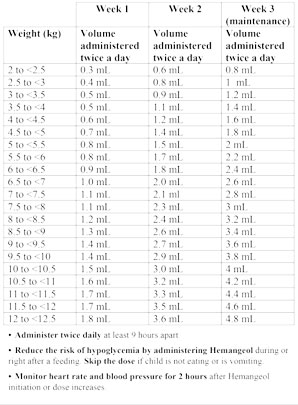
Use the Dosing Calculator to determine the recommended dosing volume of HEMANGEOL according to your patient’s weight.
*The dosing calculator is for healthcare professional use only. Please ensure all parents and caregivers consult with you about proper dosing of HEMANGEOL.
- Administer twice daily at least 9 hours apart.
- Reduce the risk of hypoglycemia by administering Hemangeol during or right after a feeding. Skip the dose if child is not eating or is vomiting.
- Monitor heart rate and blood pressure for 2 hours after Hemangeol initiation or dose increases.
Dose According to Weight
Use the Dosing Chart to determine the recommended dosing volume of HEMANGEOL according to your patient’s weight.
*The dosing chart is for healthcare professional use only. Please ensure all parents and caregivers consult with you about proper dosing of HEMANGEOL.
- Administer twice daily at least 9 hours apart.
- Reduce the risk of hypoglycemia by administering Hemangeol during or right after a feeding. Skip the dose if child is not eating or is vomiting.
- Monitor heart rate and blood pressure for 2 hours after Hemangeol initiation or dose increases.
Hemangeol® Dosing Chart
Our Dosing Chart provides weight-based dosing (kg) by Week 1, Week 2, and Week 3 (maintenance dose). Download the chart below for your records.