Hemangeol® Information For Healthcare Professionals

Discover HEMANGEOL

HEMANGEOL® (propranolol hydrochloride) oral solution is indicated for the treatment of proliferating infantile hemangioma requiring systemic therapy.

hemangioma medication recommendation by doctor

Proven Efficacy

  • 60% of patients reached complete or nearly complete resolution of infantile hemangioma by 6 months, versus 4% of patients on placebo
  • 88% of patients on HEMANGEOL® showed improvement after 5 weeks of treatment.*
    **Based on independent-investigator assessment of telangiectasis, color, textural change and distortion of anatomical landmarks or skin contours compared to baseline.
infant with hemangioma held by mother

BID Dosing

  • 3.4 mg/kg divided into 2 daily doses for 6 months was identified as the optimal maintenance dose in a double-blind clinical trial.
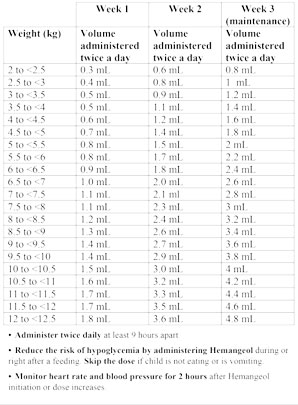
  • Dosing Chart for determining the appropriate dose for your patients
hemangeol for babies

Safety Profile

  • Fewer than 2% of patients discontinued treatment due to adverse reactions
  • The most frequently reported adverse reactions (>10%) in infants treated with HEMANGEOL® were sleep disorders, aggravated respiratory tract infections such as bronchitis and bronchiolitis associated with cough and fever, diarrhea, and vomiting.
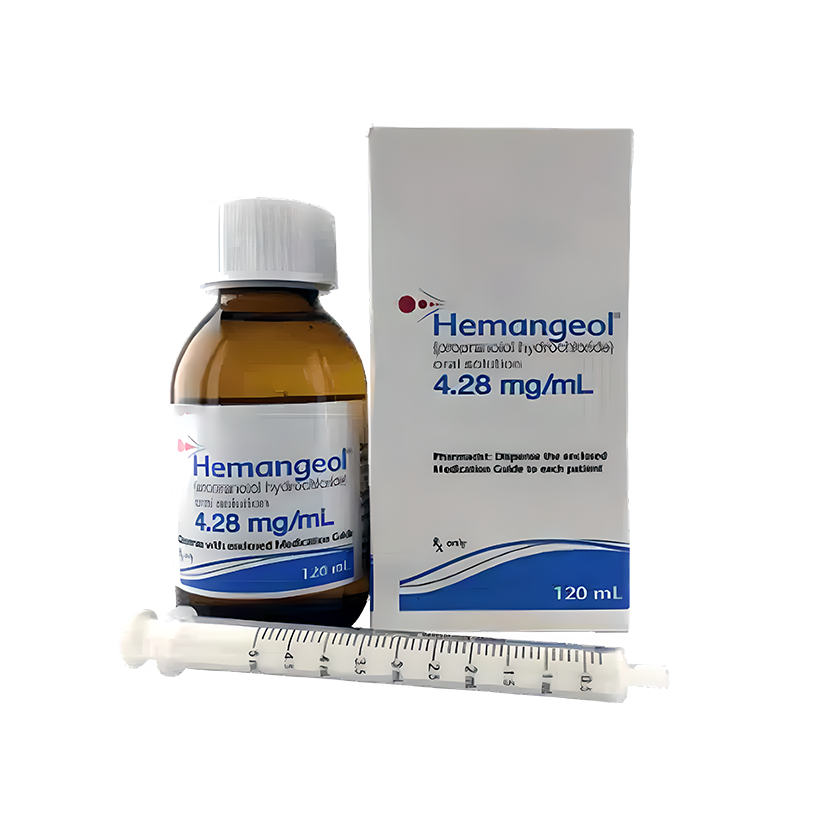
hemangeol bottle

What is HEMANGEOL?

HEMANGEOL Dosing Chart

Our Dosing Chart provides weight-based dosing (kg) by Week 1, Week 2, and Week 3 (maintenance dose). Download the chart below for your records.

Hemangeol® Dosing Calculator

Alcohol Pediatric Guidelines

How much is too much when the pediatric minimal alcohol dose for toxicity is unknown?

The HEMANGEOL Caregiver Guide

The Caregiver Guide brochure provides important information on recognizing and managing the following risks associated with the treatment with HEMANGEOL.

  • Low Bood Sugar (Hypoglycemia)
  • Breathing Problems (Bronchospasm)

As with many drugs, HEMANGEOL may cause unwanted adverse effects.

These risks should be managed for the entire duration of treatment with HEMANGEOL for each child, including any retreatment.

Healthcare Provider Resources

Providing The Best for Your Patients

We provide published data and patient education materials for healthcare providers to use with patients and their caregivers. If you have questions about these resources, please contact us.

Important Safety Information for HEMANGEOL
HEMANGEOL can cause serious side effects, including low blood sugar (hypoglycemia), for your child. Please read the important safety information for HEMANGEOL and speak with your doctor before taking HEMANGEOL.

Important Safety Information for HEMANGEOL

Do not give HEMANGEOL to your child if your child:

  • was born prematurely and has not reached the corrected age of 5 weeks
  • weighs less than 4 ½ pounds
  • is allergic to propranolol or any of the other ingredients in HEMANGEOL
  • has asthma or a history of breathing problems
  • has a heart problem, slow heart rate (less than 80 heart beats per minute), very low blood pressure
  • is at risk for low blood sugar, for example is vomiting or unable to take feedings
  • has high blood pressure caused by a tumor on the adrenal gland, called “pheochromocytoma”


Tell your doctor about all of your child’s medical conditions, all of the medicines your child takes, and all of the medicines that you take if you are breastfeeding your child.

HEMANGEOL can cause serious side effects, including:

Low blood sugar (hypoglycemia), especially if your child is not taking feedings, or is vomiting. HEMANGEOL may make it more difficult to recognize the signs and symptoms of low blood sugar in your child. To help reduce the risk of low blood sugar with HEMANGEOL, give HEMANGEOL during or shortly after feeding your child. Feed your child regularly during treatment. Tell your doctor if your child has a poor appetite. If your child is not taking feedings, due to an illness or vomiting, do not give HEMANGEOL until your child is taking feedings normally again.

If your child has any of the signs or symptoms of low blood sugar listed below during treatment with HEMANGEOL, stop giving your child HEMANGEOL and call your doctor or go to the nearest emergency room right away.

Signs or symptoms of low blood sugar include: pale, blue or purple skin color, sweating, irritability, crying for no apparent reason, irregular or fast heartbeat, poor feeding, low body temperature, unusual sleepiness, seizures, breathing stops for short periods of time, and loss of consciousness

If your child is conscious, give him/her a drink of a liquid containing sugar.

Other serious side effects can include:
  • New or worsening slow heart rate (bradycardia) or low blood pressure (hypotension).
  • Breathing problems or wheezing.
  • Stroke. HEMANGEOL may increase the risk of stroke in certain children who have severe problems with the blood vessels in their brain, particularly if your child has a large hemangioma that affects the face or head.


Call your doctor or go to the nearest hospital emergency room if your child has:

  • pale skin color, slow or uneven heartbeats, arms or legs feel cold, blue or purple skin color, or fainting.
  • breathing problems or wheezing during treatment with HEMANGEOL.


The most common side effects include:
 sleep problems, worsening respiratory tract infections, diarrhea, and vomiting.

These are not all the possible side effects of HEMANGEOL. Call your doctor for medical advice about side effects.

You are encouraged to report negative side effects of prescription drugs to the FDA. Visit www.fda.gov/medwatch or call 1-800-FDA-1088.

Please see Full Prescribing Information and Medication Guide.